If choosing a wine to suit a dish seemed complicated, get ready for another challenge.
As cheesemakers, at Cabesota we want cheese to take centre stage in our cooking. But how do we choose the cheese that best accompanies each dish? There are more than 2,000 cheeses, so it may not be as easy as it seems. Do not worry: here are the basics to help you make the right choice.
Recipes often specify a cheese, but it may not always be the best option. Once you understand which aromas, flavours and consistencies work best with different foods, you will know which cheeses suit each dish. Let us begin:


Soft-textured fresh cheeses, such as Burgos, fresh mozzarella or feta, are ideal for salads because of their mild flavour and soft consistency, as are mild, creamy cheeses. Who can resist a typical Italian salad of tomato, mozzarella, garlic and basil?
Another good option is cheeses at an intermediate stage of maturation, cut into cubes and combined with fruit such as peach or orange.
Edam is also a good choice: its mild texture makes it ideal with nuts, as is a goat’s cheese log.
More adventurous combinations can be delicious too. Blue cheese works beautifully with mixed leaves, walnuts and pear, dressed with olive oil, sherry vinegar, pear jam, the juice of one or two lemons, and salt to taste.
Pasta suits high-fat cheeses with a semi-hard or hard consistency. Popular choices include mature goat’s cheeses, mature cheeses, Parmigiano-Reggiano and Grana Padano, the latter two made from raw cow’s milk with a grainy texture. Grate them just before eating, as doing so too early loses much of their aroma.
You can also incorporate cheese in other ways. A few weeks ago, we shared 3 delicious pasta recipes starring cheese. Cheese with pasta is a winning choice.
The star cheese for gratins is semi-mature mozzarella, commonly used on pizza or pasta recipes with a thin layer of melted cheese on top.
Grated Parmesan is another good option, as are Brie and Camembert, which work well in gratins over meat, cooked cauliflower or potatoes. Usually, placing the dish about 10 centimetres from the grill is enough to brown the cheese perfectly.
A goat’s cheese log can also be lightly grilled. A simple, crowd-pleasing recipe is baked tomatoes with goat’s cheese, a drizzle of olive oil, basil and pepper.

For lovers of strong cheeses with penetrating aromas, there are many options for meat dishes. Cabrales and Roquefort may be the stars, but do not overlook Gamonedo, Azul de Valdeón or Picón Bejes-Tresviso.
For a less pronounced flavour, choose Brie or Camembert.
Unless a recipe specifically requires otherwise, use semi-mature and creamy cheeses. Their milk and fat content helps them melt easily when heated, adding aroma and flavour.
Cheese is almost indispensable in soufflés. Roquefort also makes a good sauce for pork tenderloin, as their flavours complement each other.
For sauces, cheese is usually added at the end of cooking over a low heat, stirring so it melts slowly. Otherwise, lumps may form and spoil the sauce.
For fillings, choose semi-mature cheese, Gouda, Emmental or Edam. They withstand frying and melt slowly inside a soufflé, quesadilla or pastry.
For fondue, choose very fatty cheeses that melt well, such as Gruyère or Emmental. As well as fillings, they are excellent in sandwiches and baguettes.
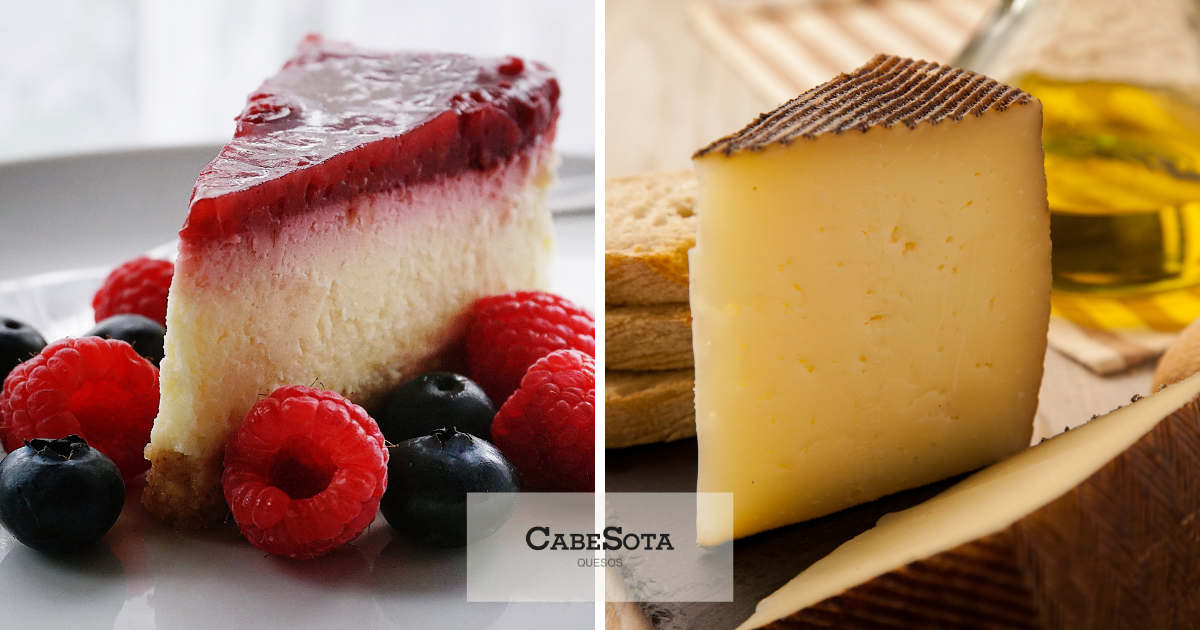
Most cheeses make an ideal dessert, regardless of maturation. The key is harmonising the cheese’s flavour and aroma with the other ingredients. Toast with Cabrales or Roquefort and apricot jam, for example, is delicious.
For baking, mascarpone is a star: it is the main cheese in tiramisu. Cheese spreads are also popular for their versatility and smooth texture. Feta and fresh Burgos cheese work in mousses, flans and creams.